














Ripper Casino Login: Security Features and Account Access in 2026
Ever fumbled with your phone at a coffee shop, trying to log into your casino account, only to wonder if the person behind you could see your password? Or worse—questioned whether that public WiFi network was recording everything you typed? Mobile casino access in 2026 isn't just about convenience; it's about protecting your money, your data, and your peace of mind while you're on the move.
Ripper Casino's login system has evolved into something far more sophisticated than the username-and-password combinations of yesteryear. With most players now accessing their accounts exclusively through smartphones—often switching between their iPhone at home and their Android tablet during lunch breaks—the security architecture needs to work seamlessly across devices without creating friction. Let's examine what actually happens when you tap that login button on your mobile screen.
Contents
Fingerprint and Face Recognition: Your Body as the Password
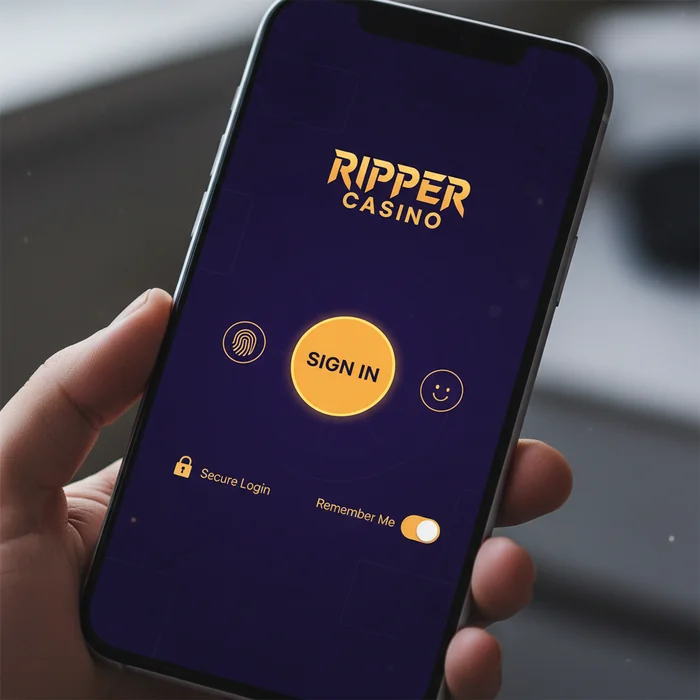
Picture this: you're standing in line at the grocery store, and you suddenly remember you wanted to check if your withdrawal processed. You pull out your phone, tap the Ripper Casino app icon, and within two seconds—just a quick glance at your screen—you're in. No typing. No memorizing complex passwords. Just your face.
Ripper Casino integrated biometric authentication in early 2025, and the implementation reveals careful consideration of mobile-first security. On iOS devices, Face ID integration uses the same secure enclave technology that protects your banking apps. Your facial data never leaves your device—Ripper Casino never sees or stores it. Instead, the authentication happens locally, and only a cryptographic token gets transmitted to verify your identity.
"I used to have this ridiculously long password with special characters because I was paranoid about security. Typing it on my phone keyboard was torture, especially with autocorrect fighting me every step. Now I just use my thumbprint on my Samsung, and honestly, I feel more secure because I'm not constantly looking over my shoulder while typing." — Marcus T., Melbourne player since 2024
The Android implementation works slightly differently due to the variety of fingerprint sensor types across devices. Ripper Casino's app detects your device's biometric capabilities during initial setup and configures accordingly. Optical sensors, ultrasonic sensors, capacitive sensors—the app adapts to whatever hardware you're carrying. This flexibility matters because players shouldn't need to upgrade their phones just to access premium security features.
What players should be aware that biometric authentication, while convenient, creates a dependency on your device's security. If someone has already unlocked your phone—say, a family member who knows your device PIN—they could potentially access your casino account. Ripper Casino addresses this with an additional security layer: high-value actions like withdrawals over certain thresholds require password re-entry even after biometric login.
Session Management Across Devices
Here's where mobile casino security gets genuinely complex. You log in on your iPhone during your morning commute. Later, you open your iPad at home. Then maybe you check something quickly on your partner's Android tablet. How does Ripper Casino know which sessions are legitimate and which might indicate account compromise?
The platform maintains what's called device fingerprinting—not to be confused with your actual fingerprint. This creates a unique identifier based on your device's characteristics: screen resolution, operating system version, browser type, installed fonts, timezone settings, and dozens of other data points. When you log in from a recognized device, access is immediate. From an unrecognized device? Additional verification steps kick in.
The mobile app stores encrypted session tokens that remain valid for 30 days of inactivity. This means you won't get logged out mid-game if you switch apps to check a text message. However, what the fine print reveals is that simultaneous sessions from geographically distant locations trigger automatic security reviews. If your account shows activity from Sydney and Singapore within the same hour, expect a verification email.
"I travel for work between Brisbane and Perth constantly. The first time I logged in from Perth, I got a notification on my phone asking if it was really me. Clicked 'yes,' and now both locations are trusted. Haven't had an issue since, even when I'm switching between cities weekly." — Jennifer K., VIP member
Session management on mobile differs from desktop in one critical way: mobile devices are far more likely to be stolen or lost. Ripper Casino's approach includes remote session termination through your account settings. If you lose your phone, you can log in from any other device and immediately kill all active sessions. The next time someone tries to use your lost phone to access your account, they'll hit a login wall.
Two-Factor Authentication on Mobile
Two-factor authentication sounds like extra hassle, but Ripper Casino's mobile implementation actually streamlines the process rather than complicating it. The platform supports three methods: SMS codes, authenticator apps, and email verification. Each has distinct advantages depending on your mobile usage patterns.
SMS verification works universally—every phone receives text messages. You enter your password, a six-digit code arrives within seconds, you type it in, and you're through. Simple. The vulnerability? SIM swapping attacks, where someone convinces your mobile carrier to transfer your number to their device. It's rare but not impossible. Ripper Casino mitigates this by tracking your device's IMEI number; if the same phone number suddenly appears on different hardware, additional verification triggers.
Authenticator apps like Google Authenticator or Authy offer stronger security because the codes generate locally on your device using time-based algorithms. No network connection required, no interception possible. The Ripper Casino mobile app includes a built-in QR code scanner for easy setup—point your camera at the screen during configuration, and the authenticator links automatically. The codes refresh every 30 seconds, creating a moving target for potential attackers.
Email verification serves as the fallback option, particularly useful when you're traveling internationally and might not have reliable SMS service. The verification emails contain time-limited links that expire after 15 minutes—long enough to be practical, short enough to minimize risk if someone gains access to your email account later.
What players should be aware that enabling 2FA does add approximately 10-15 seconds to each login. For mobile users who check their accounts multiple times daily, this compounds. Ripper Casino addresses this with trusted device designation—after successful 2FA verification, you can mark that specific device as trusted for 30 days. Subsequent logins from that device skip the second factor unless you're attempting sensitive operations like changing withdrawal methods.
Real-Time Threat Detection
Imagine the platform as a vigilant security guard who knows your habits. You typically play slots between 7-10 PM Sydney time on your iPhone. Suddenly, there's login attempt at 3 AM from a different device type, followed by immediate navigation to withdrawal settings. That's not your pattern. That's a red flag.
Ripper Casino employs behavioral analytics that run continuously in the background of the mobile app. The system learns your typical session duration, preferred games, usual betting ranges, and even your navigation patterns within the app. Deviations from these patterns don't necessarily block access, but they do trigger heightened scrutiny.
The mobile app includes real-time push notifications for security events. New device login? Notification. Withdrawal request submitted? Notification. Password changed? Notification. These arrive within seconds on your mobile device, giving you immediate awareness of account activity. Each notification includes a "This wasn't me" button that instantly locks your account and initiates the recovery process.
"Someone tried to access my account from Indonesia at 4 AM. I was asleep, but my phone buzzed with the notification. I tapped 'This wasn't me,' and within 30 seconds my account was locked. By morning, I'd reset my password and everything was fine. The scary part is I would never have known without that instant notification." — David L., Gold Coast player
The threat detection system on mobile also monitors for signs of compromised devices. If your phone shows indicators of jailbreaking (iOS) or rooting (Android), the app displays a security warning. While Ripper Casino doesn't completely block access from modified devices—a fair practice compared to standards in banking apps—they do require additional verification steps and disable certain features like biometric login.
Velocity checks represent another layer of mobile-specific protection. The system tracks how quickly you're moving through the app interface. Humans have natural rhythm and pace when navigating menus. Automated bots move differently—either much faster or with mechanical regularity. If your account suddenly exhibits bot-like behavior, temporary restrictions apply until human verification occurs.
Mobile-Optimized Password Recovery
Forgetting your password while holding a smartphone creates unique challenges. You can't easily switch between windows, you're probably not near your computer, and typing complex new passwords on a mobile keyboard invites errors. Ripper Casino's password recovery flow acknowledges these realities.
The process begins with a simple "Forgot Password" link on the mobile login screen. Enter your registered email address, and the system sends a recovery link optimized for mobile browsers. Tapping this link opens a mobile-friendly page with large input fields, clear instructions, and a password strength indicator that updates in real-time as you type.
Password requirements remain strict—minimum 12 characters, mix of uppercase, lowercase, numbers, and symbols—but the mobile interface includes a "Show Password" toggle that lets you verify what you've typed before submitting. This small feature prevents the frustration of setting a password you can't remember because autocorrect mangled it during entry.
What the fine print reveals is that password recovery requests from unrecognized devices face additional verification. If you're trying to reset your password from a phone that's never accessed your account before, Ripper Casino sends a verification code to your registered mobile number. Only after confirming that code can you proceed with the password reset. This prevents attackers who've compromised your email from immediately taking over your casino account.
The recovery emails themselves expire after one hour. Click the link after that window, and you'll need to request a new one. This time limit balances security with practicality—most players check their email within an hour, but stolen or intercepted emails become useless relatively quickly.
What Happens When Things Go Wrong
Security systems need to distinguish between you having a bad memory day and someone actively trying to break into your account. Ripper Casino's mobile lockout policy uses a graduated response system that's actually more forgiving than many competitors while maintaining robust protection.
Three failed login attempts trigger a 5-minute cooldown period. The mobile app displays a countdown timer showing exactly when you can try again. This brief pause stops automated brute-force attacks while barely inconveniencing legitimate users who mistyped their password. After the cooldown, you get three more attempts.
Six failed attempts within a 30-minute window escalate to a 30-minute lockout. At this point, the system sends an email notification to your registered address alerting you to the failed attempts. If you weren't trying to log in, you know something's wrong. If you were, you have time to find your password manager or consider using the recovery process.
Ten failed attempts result in a 24-hour account freeze. This requires manual intervention—you'll need to contact customer support through the mobile app's help section or via email. The support team verifies your identity through security questions and registered account details before lifting the freeze.
"I got locked out because my kid was playing with my phone and kept tapping the login button. I panicked at first, but the app clearly showed the countdown timer and explained what happened. Five minutes later, I was back in. Could've been way more stressful." — Rachel M., Sydney player
What players should be aware that these lockout policies apply per device. If you get locked out on your iPhone, you can still access your account from your iPad or through the mobile browser on another device. The system tracks failed attempts by device fingerprint, not just by account. This prevents a scenario where an attacker's failed attempts on their device lock you out of your own phone.
The mobile app also includes a "Security Activity" section where you can review all login attempts, successful or failed, from the past 90 days. Each entry shows the device type, approximate location (city level, not precise GPS), and timestamp. Reviewing this log periodically helps you spot unauthorized access attempts before they succeed.
The Road Ahead for Mobile Casino Security
Mobile security technology evolves rapidly, and Ripper Casino's development roadmap for late 2026 includes several features currently in beta testing. Behavioral biometrics represent the next frontier—systems that authenticate you based on how you hold your phone, your typing rhythm, and even your scrolling patterns. These passive authentication methods work continuously in the background, constantly verifying that the person using the app matches the account owner's behavioral profile.
Passwordless authentication is also on the horizon. Instead of passwords, your account would rely entirely on device-based cryptographic keys stored in your phone's secure hardware. Login would become a simple biometric confirmation, with the actual authentication happening through encrypted key exchange invisible to you. Apple's Passkeys and Google's equivalent technologies are paving this path, and casino platforms will likely follow.
Decentralized identity verification might transform how mobile casino accounts work entirely. Rather than Ripper Casino storing your personal information, you could maintain your identity credentials in a secure digital wallet on your phone, sharing only the minimum necessary data for each transaction. This approach enhances privacy while maintaining regulatory compliance—a delicate balance that current systems struggle to achieve.
The integration of artificial intelligence into threat detection will become more sophisticated. Current systems recognize patterns; future systems will predict threats before they materialize. If your account shows early indicators of compromise—subtle changes in behavior that humans wouldn't notice—AI could proactively prompt additional verification or temporarily limit high-risk actions.
As 5G networks become universal and 6G begins deployment in major cities, the speed of security verification will approach instantaneous. Multi-factor authentication that currently takes 10-15 seconds might complete in under two seconds, removing the friction that makes some players reluctant to enable stronger security measures.
The mobile casino experience in 2026 already demonstrates that security and convenience aren't opposing forces—they're complementary when implemented thoughtfully. Your phone knows you better than any password ever could, and platforms like Ripper Casino are learning to leverage that knowledge to protect your account while respecting your privacy. The question isn't whether mobile casino security will improve; it's how quickly players will adopt the advanced features already available at their fing